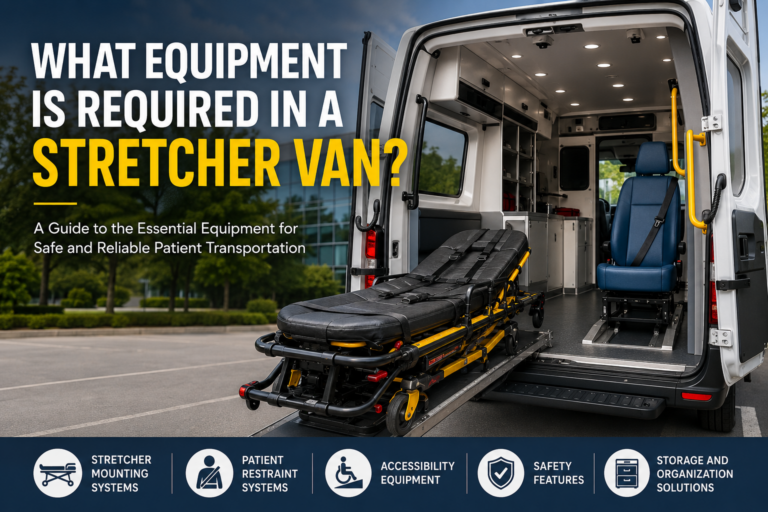
Discover the essential equipment found in professional stretcher vans and learn how each component supports safe and reliable patient transportation.
Read MoreWheelchair Van vs Stretcher Van
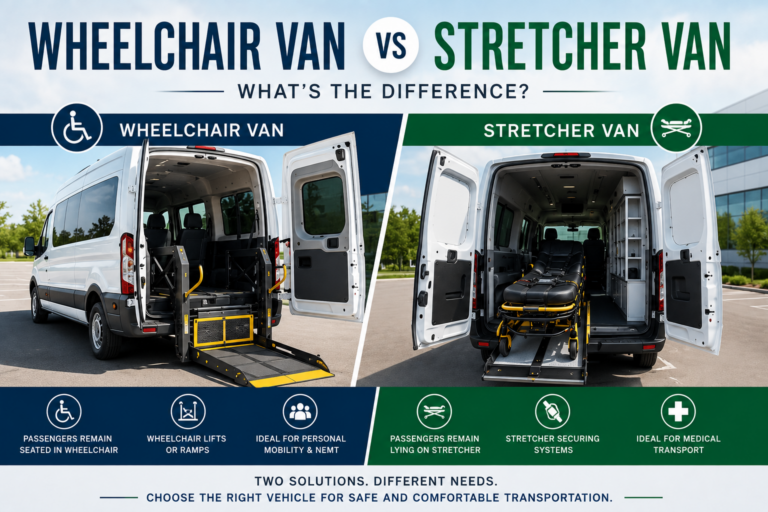
Tabla de contenido
- Mobility Vehicle Modifications, Van conversion
- July 11, 2026
Wheelchair Van vs Stretcher Van: What's the Difference?
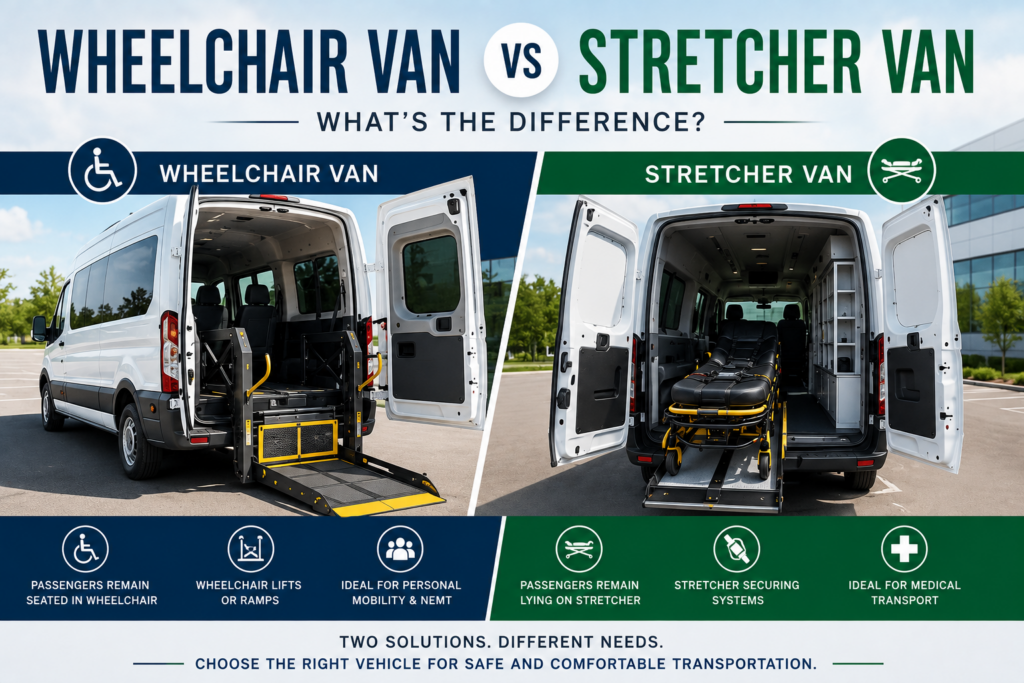
Choosing between a wheelchair van and a stretcher van depends on the passenger’s mobility needs, medical condition, and transportation requirements. Although both vehicles are designed to improve accessibility, they serve different purposes and are equipped with different interior configurations. Understanding these differences helps individuals, caregivers, transportation providers, and healthcare organizations select the most appropriate mobility solution.

What Is a Wheelchair Van?
A wheelchair van is designed to transport passengers who remain seated in their wheelchairs during travel. These vehicles are commonly equipped with wheelchair lifts or ramps, securement systems, and accessible interior layouts that allow safe boarding and transportation.
Wheelchair vans are widely used for personal transportation, non-emergency medical transportation (NEMT), assisted living facilities, community transportation programs, and mobility service providers.
What Is a Stretcher Van?
A stretcher van is designed to transport passengers who must remain lying down during transportation due to medical conditions, injuries, or limited mobility. These vehicles are equipped with stretcher mounting systems, restraint equipment, and specialized interior layouts that support safe patient transport.
Stretcher vans are commonly used by medical transportation providers, hospitals, rehabilitation centers, and organizations offering non-emergency patient transportation.
Key Differences Between Wheelchair Vans and Stretcher Vans
Although both vehicles improve accessibility, they are intended for different transportation situations. The primary difference is the passenger’s travel position. Wheelchair vans transport passengers in a seated position, while stretcher vans transport passengers who must remain lying down throughout the trip.
Additional differences include interior layout, securement systems, passenger capacity, accessibility equipment, and the types of transportation services each vehicle supports.
Which Vehicle Is Right for Your Transportation Needs?
The most appropriate vehicle depends on the passenger’s medical condition, mobility level, transportation frequency, and operational requirements. Individuals who can safely remain seated in a wheelchair typically benefit from a wheelchair van, while passengers who must remain in a lying position generally require a stretcher van.
Evaluating these requirements before selecting a vehicle helps ensure safe, efficient, and comfortable transportation.
Frequently Asked Questions
Which vehicle is commonly used for non-emergency medical transportation?
Both vehicle types are used in non-emergency medical transportation depending on the passenger’s mobility needs and medical condition.
What is the main difference between a wheelchair van and a stretcher van?
The primary difference is how the passenger travels. Wheelchair vans transport passengers seated in their wheelchairs, while stretcher vans are designed for passengers who must remain lying down.
Can both vehicles include wheelchair lifts?
Yes. Depending on the vehicle configuration, both may include wheelchair lifts or other accessibility equipment to support safe passenger loading.
Need a Wheelchair Van or Stretcher Van Conversion?
If you’re evaluating accessible transportation solutions, understanding the differences between wheelchair vans and stretcher vans is an important first step. Our team provides professional vehicle conversion solutions designed to meet a wide range of mobility and medical transportation requirements.
Explore our Wheelchair Van Conversion and Stretcher Van Conversion services to learn more about available accessibility configurations.
Related Mobility Repair Services
Wheelchair Van vs Stretcher Van: Key Differences Explained
Learn the differences between wheelchair vans and stretcher vans, including passenger needs, accessibility features, medical transport applications, and vehicle configurations.
Read MoreWho needs a Stretcher Van?

A stretcher van is required when a patient cannot safely travel in a seated position during real transport conditions such...
Read MoreSide Entry vs Rear Entry Wheelchair Van Conversion
Explore the differences between side entry and rear entry wheelchair van conversions, including accessibility, vehicle operation, passenger needs, and transportation...
Read MoreWhat Vehicles Can Be Made Wheelchair Accessible?

Learn which vehicles can be converted for wheelchair accessibility and explore common mobility features such as wheelchair lifts, ramps, securement...
Read MoreHow Interior Layout Design Impacts Wheelchair Van Efficiency
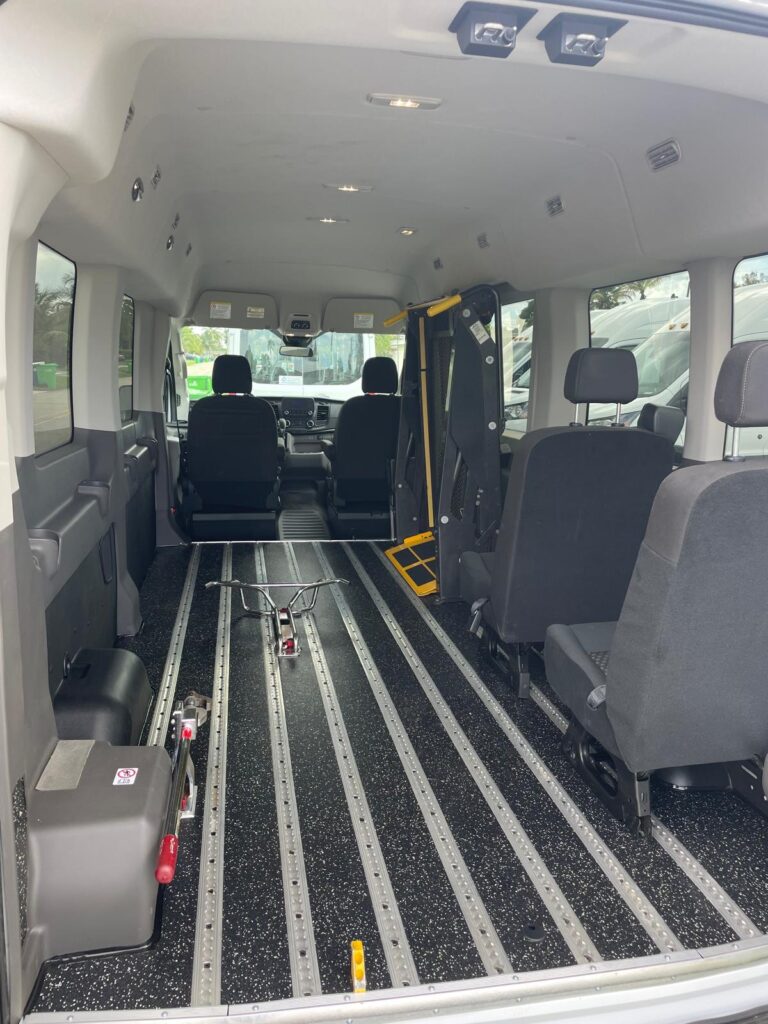
Learn how interior layout design affects safety, efficiency, and daily operations in wheelchair-accessible vans used for medical and mobility transportation.
Read MoreThe Importance of Preventive Maintenance for Mobility Vans
Discover why preventive maintenance is essential for keeping mobility vans safe, reliable, and fully functional. Learn the key areas to...
Read MoreWhy ADA Compliance Matters in Medical Transportation Services
Discover why ADA compliance is essential for safe, accessible, and reliable medical transportation, and how it protects patients, caregivers, and...
Read More