
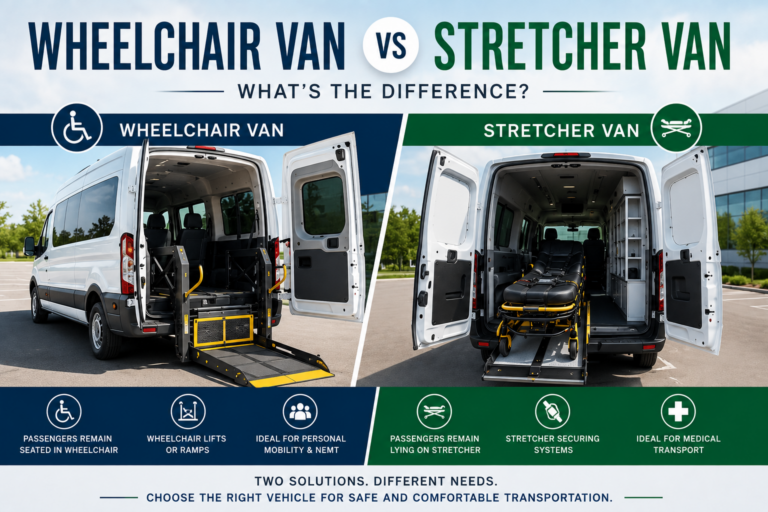
Learn the differences between wheelchair vans and stretcher vans, including passenger needs, accessibility features, medical transport applications, and vehicle configurations.
Read MoreSide Entry vs Rear Entry Wheelchair Van Conversion
Tabla de contenido
When selecting a wheelchair-accessible vehicle, one of the most important decisions involves choosing the most appropriate entry configuration. Side-entry and rear-entry wheelchair van conversions are among the most commonly used accessibility layouts, but each option offers different operational advantages depending on transportation requirements, passenger needs, and vehicle usage.
Understanding how these configurations differ can help individuals, families, transportation providers, and healthcare organizations make a more informed decision when evaluating accessible transportation solutions.
Why Entry Configuration Matters in Accessible Transportation
The entry configuration of an accessible vehicle can influence daily transportation operations, passenger convenience, accessibility workflows, and overall vehicle usability. While both side-entry and rear-entry layouts are designed to improve accessibility, they can affect how passengers board the vehicle, how transportation staff assist passengers, and how the vehicle functions in different operating environments.
Selecting the appropriate configuration often depends on balancing accessibility objectives with practical transportation considerations.
Key Differences Between Side Entry and Rear Entry Conversions
Although both configurations improve accessibility, they differ in several operational aspects. Factors such as passenger movement, interior accessibility, loading procedures, parking conditions, and transportation workflows can influence which option is more suitable for a specific application.
| Feature | Side-Entry Conversion | Rear-Entry Conversion |
|---|---|---|
| Parking flexibility | Excellent | Limited |
| Cost | Higher | More budget-friendly |
| Ideal for independent drivers | Yes | Less common |
| Installation complexity | More advanced | Simpler |
| Best for caregivers | Yes | Yes |
How Vehicle Usage Influences the Best Conversion Type
The intended use of the vehicle is often one of the most important considerations when comparing accessibility layouts. Transportation requirements can vary significantly between personal transportation, healthcare services, community transportation programs, and commercial mobility operations.
Because every transportation environment has unique accessibility challenges, evaluating daily vehicle usage can help determine which configuration better aligns with long-term operational requirements.
Advantages of Side Entry Conversions
Side-entry wheelchair van conversions are often preferred when interior accessibility and passenger interaction are important considerations. This configuration typically provides direct access to the main cabin area, which can improve passenger movement within the vehicle and support a wider range of transportation applications.
Advantages of Rear Entry Conversions
Rear-entry wheelchair van conversions are often selected for situations where straightforward passenger loading and efficient transportation workflows are priorities. Depending on the transportation environment, this configuration can provide a practical accessibility solution while supporting consistent daily operations.
Which Configuration Is Right for Your Needs?
There is no universal solution that fits every accessibility requirement. The most suitable configuration depends on passenger mobility needs, vehicle usage patterns, transportation objectives, and operational preferences.
Comparing these factors before selecting a conversion can help ensure that the vehicle supports both accessibility goals and long-term transportation efficiency.
Frequently Asked Questions About Side Entry and Rear Entry Wheelchair Van Conversions
Which entry configuration is more commonly used in personal vehicles?
The most common configuration depends on accessibility preferences, vehicle design, parking conditions, and how the vehicle will be used on a daily basis.
Which option is typically preferred for transportation fleets?
Transportation providers evaluate entry configurations based on passenger volume, route design, accessibility requirements, and operational efficiency objectives.
Can the same vehicle model support different conversion layouts?
In many cases, accessibility solutions can be adapted differently depending on the vehicle platform, available space, and transportation requirements.
Do entry configurations affect future vehicle modifications?
The accessibility layout selected during the conversion process may influence future equipment integration, seating arrangements, and vehicle adaptation possibilities.
What should be evaluated before choosing an entry configuration?
Passenger mobility needs, vehicle dimensions, transportation objectives, parking environments, and accessibility requirements should all be considered before selecting a conversion layout.
Explore Additional Accessibility Resources
Understanding the differences between side-entry and rear-entry configurations is only one part of selecting an accessible transportation solution. You may also want to learn how wheelchair van conversions work or explore which vehicle types can be adapted for accessibility.
Related Mobility Repair Services


Side Entry vs Rear Entry Wheelchair Van Conversion
Explore the differences between side entry and rear entry wheelchair van conversions, including accessibility, vehicle operation, passenger needs, and transportation...
Read More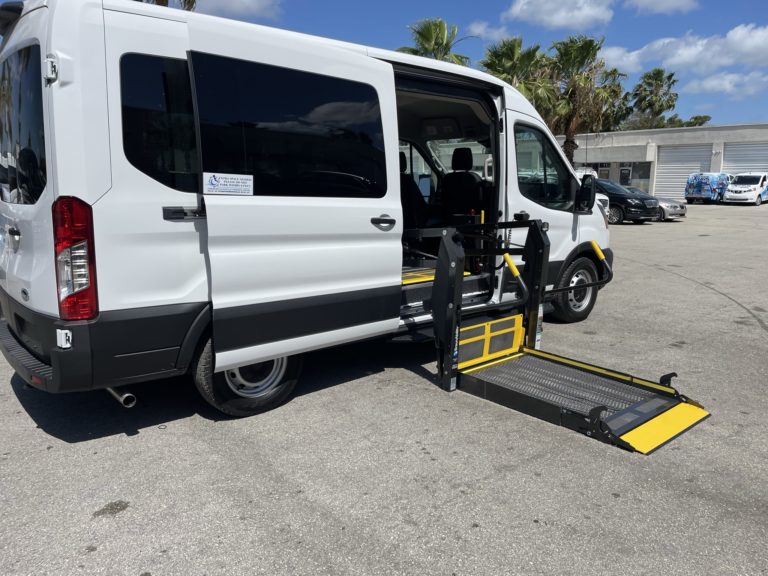
What Is a Wheelchair Van Conversion?
Learn what a wheelchair van conversion is, how it works, and the different types available for improving vehicle accessibility and...
Read More
What Vehicles Can Be Made Wheelchair Accessible?
Learn which vehicles can be converted for wheelchair accessibility and explore common mobility features such as wheelchair lifts, ramps, securement...
Read More