
What Is Handicap Lift Repair?
Handicap lift repair involves diagnosing and fixing issues in wheelchair van lift systems to restore safe, reliable operation, including hydraulic, electrical, and mechanical components that support wheelchair accessibility in vehicles.
Tabla de contenido
What Is Handicap Lift Repair?
Handicap lift repair refers to the process of diagnosing, troubleshooting, and restoring wheelchair lift systems used in accessible vehicles such as mobility vans, paratransit units, and non-emergency medical transport (NEMT) vehicles.
These systems are essential for safe wheelchair accessibility, allowing users to enter and exit vehicles using a powered lifting platform. Because they operate under constant load and daily use, they are exposed to mechanical stress, hydraulic pressure cycles, and electrical demand.
A proper repair process does not focus only on replacing visible damaged parts. Instead, it involves identifying the root cause of failure across mechanical, hydraulic, and electrical systems to ensure long-term safe operation.
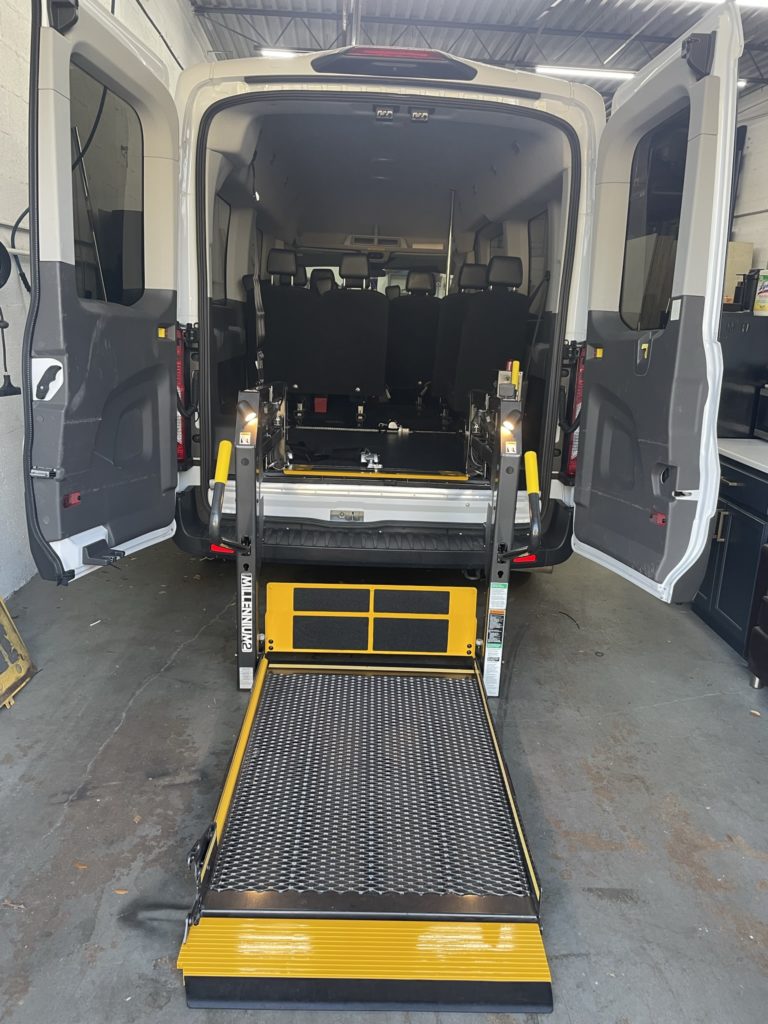
What a Wheelchair Lift System Is Made Of
A wheelchair lift system is a multi-component mechanical system designed to work in sync for safe lifting and lowering operations.
The hydraulic system is responsible for generating lifting force. It includes the pump, hydraulic fluid lines, and cylinders that convert pressure into controlled movement. If pressure is weak or unstable, the lift loses strength or stops mid-cycle.
The mechanical structure includes lift arms, pivot joints, and the platform itself. These components carry the weight of the passenger, meaning any misalignment or wear can cause instability or uneven movement.
The electrical system controls activation and movement. It consists of motors, relays, wiring harnesses, and control switches. Electrical faults often result in intermittent operation or total system failure.
Finally, the safety system includes interlocks, sensors, and limit switches. These prevent operation unless all safety conditions are met, ensuring the lift does not move in unsafe conditions.
How Handicap Lift Systems Fail in Real Operation
Wheelchair lift systems typically fail gradually due to repeated mechanical stress and environmental exposure, rather than sudden breakdowns.
One of the most common issues is mechanical wear in pivot points and lift arms. As these components degrade, the platform may become unstable, move unevenly, or produce vibration during operation.
In hydraulic systems, failures often begin with small fluid leaks or pressure loss. This reduces lifting strength and may cause slow operation or mid-cycle stoppage. In more advanced cases, air contamination in hydraulic lines leads to inconsistent movement.
Electrical issues are equally common. A faulty relay, damaged wiring harness, or worn control switch can cause intermittent operation, where the lift works inconsistently or fails randomly.
Because these failures often overlap, proper diagnosis must focus on identifying the primary root cause instead of replacing individual symptoms.
How Technicians Diagnose Wheelchair Lift Problems
Professional technicians use a structured diagnostic process to isolate the exact cause of wheelchair lift failure.
The process begins with electrical system verification, where voltage supply, grounding, and continuity are tested. Without stable electrical power, no other system can function correctly.
Next, technicians inspect control switches, relays, and signal pathways to confirm proper communication between user input and system response.
The hydraulic system test evaluates pressure levels and fluid integrity. This helps identify leaks, weak pressure output, or internal system inefficiencies.
Finally, safety interlocks and limit switches are tested to ensure the system only operates under safe conditions. Even if mechanical and electrical systems are functional, safety logic failures can still disable the lift.
Hydraulic vs Electric Lift Failures
Understanding the difference between hydraulic and electric wheelchair lift failures is essential for accurate diagnosis, because both systems fail in completely different ways and require different repair approaches.
Hydraulic lift failures (gradual degradation)
Hydraulic systems usually fail progressively. The most common early symptom is a loss of lifting power, where the platform becomes slower or struggles under weight.
This typically happens due to:
- Hydraulic fluid leaks in hoses or cylinder seals
- Internal pressure loss caused by worn seals
- Air contamination inside hydraulic lines
- Pump wear reducing system pressure output
As the problem worsens, the lift may:
- Stop mid-cycle
- Lower unevenly or drift downward
- Produce jerky or unstable movement
Hydraulic failures are dangerous because they often start small but become severe over time without obvious warning.
Electric lift failures (sudden or intermittent)
Electric systems behave differently. Instead of gradual decline, they often fail suddenly or inconsistently.
Common causes include:
- Faulty relays or control modules
- Burned or weakened lift motor
- Damaged wiring harness or loose connections
- Faulty switches or signal interruption
Typical symptoms:
- No response when activated
- Lift works intermittently
- Clicking sound but no movement
- Sudden shutdown during operation
Electric failures are often mistaken for hydraulic problems, which is why proper diagnosis is critical.
Environmental and Usage Factors That Cause Failures
Wheelchair lift systems are exposed to continuous real-world stress, especially in commercial and medical transport environments such as NEMT or mobility van services.
One of the main factors is daily operational cycles. A lift may be used dozens of times per day, which creates constant wear on mechanical joints, hydraulic pressure systems, and electrical components.
Another major factor is vibration from driving conditions. Over time, vibration loosens electrical connections, weakens mounting points, and accelerates fatigue in metal components.
Environmental exposure also plays a key role:
- Humidity and moisture can cause corrosion in wiring and connectors
- Dust and dirt can affect sensors and moving parts
- Temperature changes can impact hydraulic fluid performance
Finally, overloading the platform beyond its rated capacity significantly reduces system lifespan and increases the risk of structural damage.
Preventive Maintenance Checklist
Preventive maintenance for wheelchair lift systems is not just routine cleaning—it is a structured reliability process designed to prevent mechanical, hydraulic, and electrical failure before it happens.
In real operational environments such as NEMT fleets or mobility vans, lifts are used multiple times per day. This creates cumulative stress on pivot points, hydraulic pressure systems, and electrical relays, making preventive inspection critical.
A proper maintenance routine includes:
- Cycle testing under load conditions The lift should be tested with weight similar to real wheelchair load to detect early signs of hydraulic weakness or motor strain.
- Hydraulic system inspection Technicians check for micro-leaks, pressure inconsistencies, and fluid degradation. Even small leaks can indicate seal failure that will worsen over time.
- Lubrication of mechanical joints and pivot points: Friction buildup in arms and joints is one of the earliest causes of uneven movement or platform instability.
- Electrical system inspection: Wiring harnesses, relays, and connectors are checked for corrosion, looseness, or heat damage caused by vibration and current overload.
Preventive maintenance is essentially early failure detection, not just routine servicing.
When a Wheelchair Lift Becomes Unsafe
A wheelchair lift does not become unsafe suddenly in most cases—it becomes unsafe through progressive system degradation that eventually reaches a critical point.
One of the most serious warning signs is uncontrolled movement, such as the platform drifting downward while elevated. This usually indicates hydraulic seal failure or pressure loss.
Other critical safety indicators include:
- Structural instability under load, where the platform flexes or shifts unnaturally
- Electrical overheating, often detected by burning smell or discoloration in connectors
- Repeated system resets or failures, indicating deeper control module or relay faults
- Sudden drops or jerking motion, which suggest mechanical or hydraulic imbalance
At this stage, the system should be considered out of service immediately, since continued operation increases the risk of passenger injury and further system damage.
Conclusion
Handicap lift repair is ultimately about ensuring the safe interaction between hydraulic, mechanical, and electrical systems that allow wheelchair accessibility in vehicles.
Understanding how failures develop—from early wear to critical breakdown—helps operators and technicians prevent unsafe conditions and maintain reliable transportation systems.