
How Much Does It Cost to Convert a Van for Wheelchair Accessibility?
- Van conversion
- November 16, 2026
How Much Does It Cost to Convert a Van for Wheelchair Accessibility?
The cost to convert a van for wheelchair accessibility depends on the vehicle, the type of access system, and the modifications required to accommodate a wheelchair user. A conversion involving a wheelchair ramp may have different equipment and installation requirements than one using a powered lift.
Because every van has different dimensions and configurations, there is no single price that applies to every project. The most reliable way to determine the cost is to evaluate the vehicle and identify the equipment and modifications needed.
This guide explains the main factors that influence wheelchair van conversion costs and what to consider before requesting a quote.
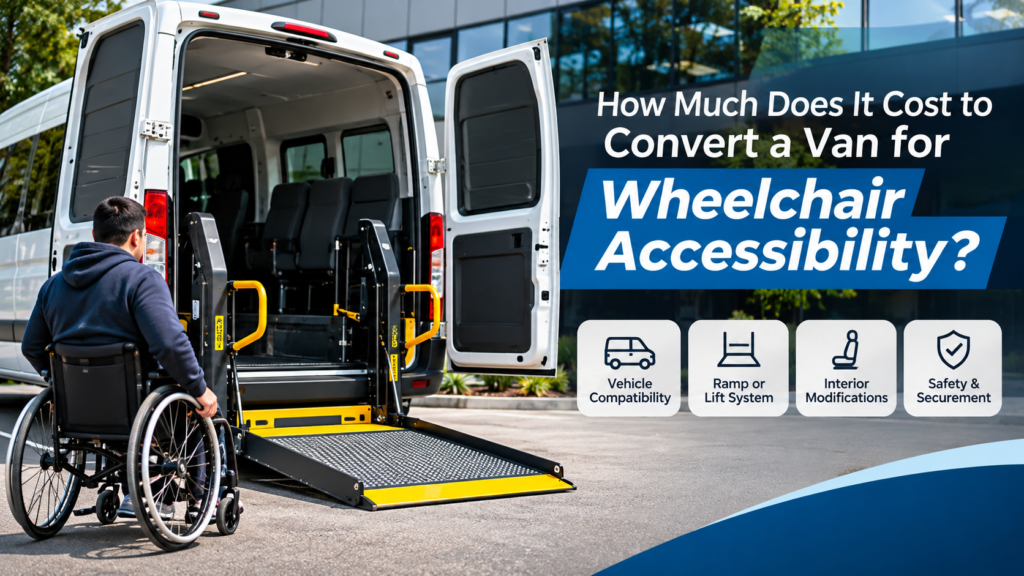
What Factors Affect the Cost of a Wheelchair Van Conversion?
The total cost is primarily determined by four considerations:
1. The Van's Make, Model, and Configuration
Not every van is suitable for the same accessibility modifications. Interior dimensions, floor height, door openings, and available space influence which equipment can be installed and how the vehicle must be adapted.
The van’s existing condition also matters. A vehicle that requires additional preparation or modifications may involve more installation work.
2. Wheelchair Ramp or Powered Lift
The access system is one of the main components of a wheelchair van conversion.
Wheelchair ramps: Provide an inclined surface for entering and exiting the vehicle. Their suitability depends on the vehicle’s height, available space, entry location, and wheelchair requirements.
Powered wheelchair lifts: Use a platform to raise and lower the wheelchair user. They require compatible installation space and the appropriate mechanical and electrical integration.
These systems have different equipment and installation requirements. The right choice depends on the vehicle and the user’s accessibility needs, not simply on the initial equipment price.
3. Interior and Wheelchair Securement Modifications
The vehicle may require interior changes to provide sufficient space for wheelchair access and passenger positioning.
Depending on the selected configuration, the work may include floor or interior adjustments, wheelchair positioning areas, securement systems, and changes to the seating arrangement.
The number and extent of these modifications affect the amount of equipment and labor required.
4. Installation and Customization Requirements
Installation labor can influence the total conversion cost, particularly when the selected equipment requires complex integration with the vehicle.
The work may involve fitting and securing the accessibility system, connecting its mechanical or electrical components, and verifying that the equipment operates correctly within the vehicle’s configuration.
The time and technical work required depend on equipment compatibility and the installation requirements of each project. These factors should be considered when evaluating the final conversion estimate.
Does the Cost Include the Van?
Not necessarily. The cost of converting a van and the cost of purchasing a vehicle are two separate expenses.
If you already own a van, the conversion estimate should focus on evaluating its suitability and determining the modifications required.
If you need to purchase a vehicle, consider that expense separately when calculating your overall budget. Choosing a van that is compatible with your intended accessibility configuration can help avoid selecting a vehicle that requires unsuitable or extensive modifications.
How Can You Get an Accurate Wheelchair Van Conversion Estimate?
To receive a useful estimate, provide the information needed to evaluate your specific project:
Vehicle details: Make, model, year, and current condition.
Access requirements: Whether you need a ramp or powered lift, if already determined.
Wheelchair requirements: The wheelchair dimensions and the intended entry and positioning arrangements.
Interior configuration: Passenger seating and available space requirements.
Additional modifications: Any other accessibility features you need.
The estimate should identify the proposed equipment, required modifications, installation work, and any additional expenses. This makes it easier to understand what the quoted amount includes and compare different configurations accurately.